My 2025 Reading Wrap-Up: The Good, The Bad, and The Transformational
Twenty-two books. That was the tally for my best books read in 2025.
If you were to look at a pie chart of my reading habits this year, you’d see a distinct pattern: a heavy dose of Artificial Intelligence (because ignorance there is no longer an option), a deep dive into Indian history, and a necessary detour into longevity and health, because all that knowledge is useless if you aren't around to use it.
Some of these books reshaped my worldview. Others felt like a chore I finished out of sheer stubbornness.
As corporate professionals, our time is the only asset we can’t compound. We need to know what’s worth the 10-hour investment and what’s better left as a summary. Whether you are looking for your next history obsession or a manual to survive the AI revolution, this 2025 reading list has you covered.
Below are links to some of my previous blogs for further reading.
Here is the pragmatic breakdown of everything I read this year.
1. Longevity Guidebook: How to Slow, Stop, and Reverse Aging - and NOT Die from Something Stupid
Author: Peter H. Diamandis Rating: 4/5 Get your copy here

Peter Diamandis is the eternal optimist of Silicon Valley. In this book, he argues that aging is an engineering problem, not a biological inevitability. He breaks down the "Moonshots" of longevity science while giving practical advice on the "stupid" things that kill us early, like not sleeping or ignoring blood pressure.
If you want to live long enough to see the singularity, this is your manual. It’s dense with science but written with infectious enthusiasm.
Read my detailed breakdown here: Longevity Guidebook Review
2. Total Immersion: The Revolutionary Way To Swim Better, Faster, and Easier
Author: Terry Laughlin Rating: 4/5 Get your copy here

Most of us swim like we are fighting the water. Terry Laughlin teaches you to cooperate with it. This book isn't just about laps; it's a philosophy of movement. He deconstructs the mechanics of swimming to focus on balance and drag reduction rather than brute force.
It completely changed how I approach the pool. If you are tired of being out of breath after one lap, this method is the fix.
Check out my deep dive: Total Immersion Book Review
3. Artificial Intelligence: A Guide for Thinking Humans
Author: Melanie Mitchell Rating: 4/5 Get your copy here

Amidst the hype of LLMs, Mitchell provides a grounded, reality-checked perspective. She explains what AI actually is, and more importantly, what it isn't. She separates the sci-fi fear-mongering from the actual limitations of neural networks.
This is the book for the skeptic who wants to understand the machinery behind the magic without getting lost in code.
See the full review: Artificial Intelligence: A Guide for Thinking Humans
4. Full Catastrophe Living: Using the Wisdom of Your Body and Mind to Face Stress, Pain, and Illness
Author: Jon Kabat-Zinn Rating: 5/5 Get your copy here

A 5-star masterpiece. Kabat-Zinn’s work is the gold standard for secular mindfulness. This isn't about incense and chanting; it's a rigorous, clinically backed approach to handling the inevitable "catastrophe" of human existence - stress, pain, and chaos.
It is a long read, but it serves as a toolkit for mental resilience. Essential for anyone in a high-pressure corporate role.
Read my thoughts on applying this to daily life: Full Catastrophe Living Review
5. Lawrence of Arabia
Author: Ranulph Fiennes Rating: 4/5 Get your copy here

Written by "the world's greatest living explorer," this biography of T.E. Lawrence feels gritty and real. Fiennes uses his own experience in the desert to validate (or debunk) the myths surrounding Lawrence.
It’s a study in leadership, endurance, and the burden of fame. If you love history with a pulse, pick this up.
6. Catch Me If You Can: The True Story of a Real Fake
Author: Frank W. Abagnale Rating: 3/5 Get your copy here

You have seen the movie; the book is the raw source material. Abagnale’s exploits as a teenage con artist are entertaining, but the writing style is straightforward and lacks the cinematic flair of Spielberg.
It’s a fun, light read, but don't expect deep introspection. It’s strictly popcorn for the brain.
7. Serpentine: A True Odyssey of Love and Murderous Evil
Author: Thomas Thompson Rating: 4/5 Get your copy here

A chilling true crime classic about Charles Sobhraj, the "Bikini Killer." It traces his path across the Hippie Trail of the 1970s. Thompson captures the psychological manipulation Sobhraj used to prey on travelers.
It’s disturbing but masterful. A stark reminder that charisma often masks a lack of conscience.
8. Abundance: The Future Is Better Than You Think
Author: Peter H. Diamandis Rating: 3/5 Get your copy here

Another entry from Diamandis. While the premise; that technology will solve resource scarcity; is inspiring, it feels a bit dated compared to his newer works.
It’s good for a shot of optimism, but if you read Longevity Guidebook or his other works, you might find the themes repetitive.
9. Lying for Money: How Legendary Frauds Reveal the Workings of Our World
Author: Dan Davies Rating: 3/5 Get your copy here

Davies argues that fraud isn't a bug in the financial system; it’s a feature. Fraud only works because the system relies on trust.
The concept is brilliant, but the execution is dry in parts. Recommended only if you are deeply interested in financial mechanics or white-collar crime.
10. 1991: How P. V. Narasimha Rao Made History
Author: Sanjaya Baru Rating: 5/5 Get your copy here

A definitive account of the year India changed forever. Baru details how P.V. Narasimha Rao, an accidental Prime Minister, dismantled the License Raj and opened India's economy.
This is a masterclass in political maneuvering. For anyone interested in modern India’s economic rise, this is mandatory reading.
11. Cobalt Red: How the Blood of the Congo Powers Our Lives
Author: Siddharth Kara Rating: 5/5 Get your copy here
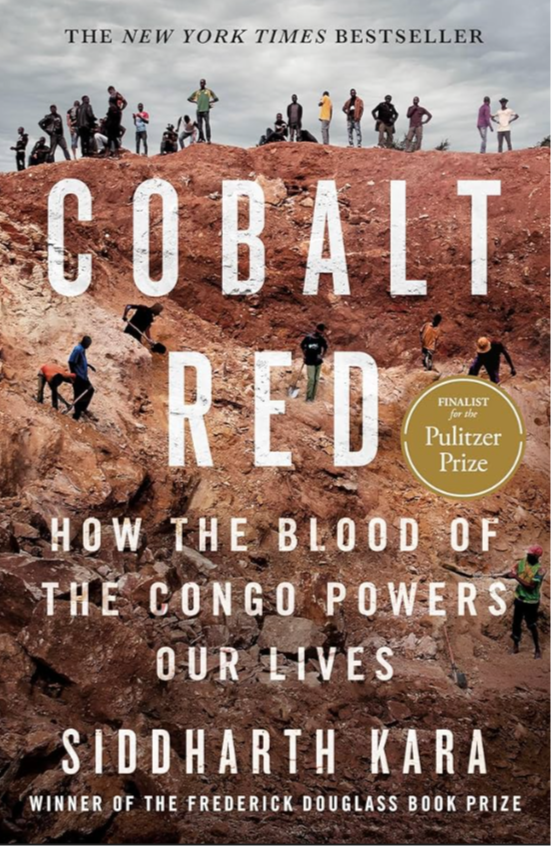
This book will break your heart. It exposes the brutal reality of cobalt mining in the Congo - the mineral essential for our smartphones and EVs.
Kara investigates the supply chain we all rely on, revealing modern-day slavery. It’s a tough read, but a necessary one for ethical consumption.
12. AI 2041: Ten Visions for Our Future
Author: Kai-Fu Lee Rating: 4/5 Get your copy here

Kai-Fu Lee blends storytelling with technical analysis. He uses "sci-fi" short stories to illustrate how AI will likely function in 2041, followed by a breakdown of the tech.
It’s a creative format that makes futurism digestible. Great for visualizing the practical applications of AI beyond just chatbots.
13. When the Body Says No: The Cost of Hidden Stress
Author: Gabor Maté Rating: 4/5 Get your copy here

Maté connects the dots between emotional suppression and physical illness. He argues that high-achieving people who "never say no" often end up paying the price with their health.
It’s a sobering check for every workaholic. The science is sometimes debated, but the anecdotal evidence is powerful.
14. The Coming Wave: Technology, Power, and the Twenty-first Century's Greatest Dilemma
Author: Mustafa Suleyman Rating: 4/5 Get your copy here

Suleyman, a co-founder of DeepMind, warns about the containment problem. As AI and biotech become cheaper and more powerful, how do we prevent bad actors from causing chaos?
It’s a wake-up call on the fragility of our current safety rails.
Dive deeper here: The Coming Wave AI Future Book Review
15. Trade Wars Are Class Wars: How Rising Inequality Distorts the Global Economy and Threatens International Peace
Author: Matthew C. Klein Rating: 3/5 Get your copy here

A heavy economic text arguing that trade imbalances are caused by domestic inequality, not foreign cheating.
It’s insightful but dense. If you aren't into macroeconomics, you might find this one a slog.
My full take: Trade Wars and Inequality Book Review
16. Money
Author: Yuval Noah Harari Rating: 5/5 Get your copy here

Harari does what he does best: zooms out to give a macro-historical view. He deconstructs money not as currency, but as the most successful story humans have ever told.
It’s a short, punchy read that completely reframes how you look at the cash in your wallet.
Read the review: The Evolution of Money
17. Supremacy: AI, ChatGPT, and the Race That Will Change the World
Author: Parmy Olson Rating: 4/5 Get your copy here

This is the corporate thriller version of the AI wars. Olson takes you inside the boardrooms of OpenAI, Google, and Microsoft.
It’s less about the tech and more about the egos and power plays driving it.
See the full story: Supremacy Book Review
18. Indian Summer: The Secret History of the End of an Empire
Author: Alex von Tunzelmann Rating: 4/5 Get your copy here

A gossip-fueled yet historically rigorous look at the partition of India. It focuses on the personal relationships between the Mountbattens and Nehru.
It reads like a novel but hits hard with the tragedy of partition. A fantastic companion piece to 1991.
19. Nexus: A Brief History of Information Networks from the Stone Age to AI
Author: Yuval Noah Harari Rating: 4/5 Get your copy here

Harari’s latest offering examines how information networks connect (and control) us. He argues that AI is the first network that can create its own stories, which poses a unique threat.
If you liked Sapiens, this is the logical successor for the digital age.
Read the review: Nexus Book Review
20. The Golden Road: How Ancient India Transformed the World
Author: William Dalrymple Rating: 4/5 Get your copy here

Dalrymple shifts the focus from the Silk Road to the Golden Road - India’s ancient maritime trade routes that exported Buddhism, math, and art to the world.
It’s a dazzling reminder of a time when India was the intellectual and economic hub of Asia.
21. The Singularity Is Nearer: When We Merge with AI
Author: Ray Kurzweil Rating: 4/5 Get your copy here

Kurzweil doubles down on his predictions. He argues we are on track for the singularity by 2045. The book is optimistic, data-heavy, and slightly terrifying.
Whether you believe him or not, his track record makes this impossible to ignore.
See my analysis: The Singularity Is Nearer Book Review
22. 2024: The Election that Surprised India
Author: Rajdeep Sardesai Rating: 4/5 Get your copy here

A fresh, hot-take on the recent Indian elections. Sardesai analyzes the data and the shifting sentiments that led to an unexpected outcome.
It provides immediate context to the current political landscape in the world's largest democracy.
2025 Reading Conclusion
Reading 22 books in a year isn’t just about the number; it’s about the collision of ideas.
When you read Longevity Guidebook right after When the Body Says No, you realize that health is both a mechanical engineering problem and an emotional one. When you read 1991 alongside 2024, you see the arc of a nation’s destiny.
If you only pick up one book from this 2025 reading list, make it Full Catastrophe Living for your mind, or Cobalt Red for your conscience.
One reflective question for you: Which book did you read this year that you are still thinking about today?
Happy Reading.


Comments